Cozy Cable Fingerless Gloves: Free Step-by-Step Pattern
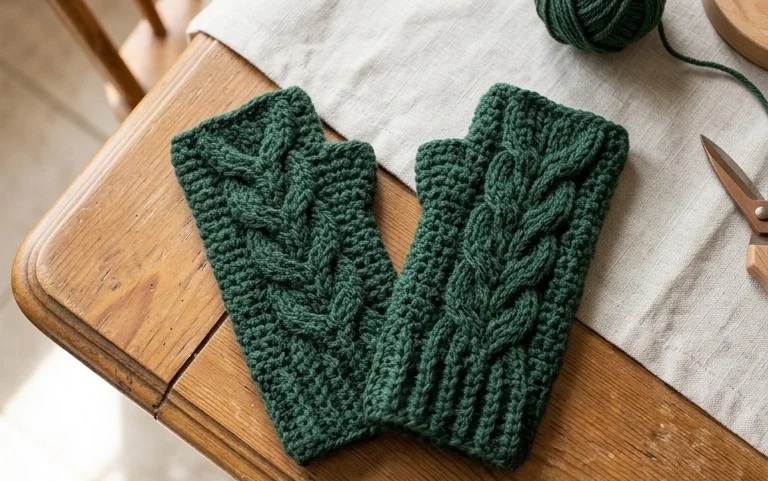
These cable fingerless gloves wrap your wrists in warmth while keeping your fingers free for handling morning coffee or typing at your desk. The twisted rope details create a thick, plush fabric that feels sturdy against a brisk wind, making them a satisfying project for anyone wanting to learn cable stitches. You will master the rhythm of crossing stitches to build raised patterns that sit beautifully on the back of the hand. Whether you are crafting a thoughtful gift or stocking up your own winter wardrobe, the process is straightforward and yields a polished, professional finish that lasts for years.
Why You’ll Love This Pattern
This classic crochet dishcloth is designed using the waffle stitch, which creates a textured grid that excels at scrubbing dishes and cleaning kitchen surfaces. You will find this pattern rewarding because it works up quickly using basic post stitches, making it a functional project that builds your confidence in creating dimensional fabrics. Because it uses a small amount of cotton yarn, it serves as an excellent way to use up leftover skeins from larger projects. The resulting fabric is thick and absorbent, providing a sturdy tool for daily household chores.
I finished this dishcloth in one evening while watching television. The texture is much better for scrubbing pans than the flat cloths I usually make.
— Sarah, home crafter
Pattern Overview & Skill Level
- Skill Level: Advanced Beginner
- Approximate Time: 2 to 3 hours
- Construction: Worked in flat rows back and forth
- Finished Dimensions: 8 inches by 8 inches
Materials & Supplies Needed
- Yarn: Worsted weight (#4), 100% cotton, approximately 85 yards. Cotton is essential for its absorbency and heat resistance.
- Hook Size: 5.0 mm (H-8)
- Notions: Tapestry needle for weaving in ends, scissors.
- Safe yarn substitutions: You may use a cotton-linen blend for increased durability, though a pure acrylic yarn is not recommended as it lacks the necessary absorbency for kitchen tasks.
Stitch Guide & Abbreviations (US Terms)
- ch = chain
- st(s) = stitch(es)
- dc = double crochet
- FPdc = front post double crochet (yarn over, insert hook from front to back to front around the post of the stitch below, yarn over and pull up loop, complete as a normal dc)
- RS = right side
- WS = wrong side
Step-by-Step Pattern Instructions
Foundation
Ch 30. This creates a base that, once worked, results in an 8-inch square.
The Main Body
Row 1 (RS): Dc in 4th ch from hook and in each ch across. (28 sts)
Row 2 (WS): Ch 2 (counts as st throughout), dc in next st, *FPdc around next st, dc in next 2 sts; repeat from * across, ending with dc in last 2 sts. (28 sts)
Row 3 (RS): Ch 2, dc in next st, *dc in next st, FPdc around next 2 sts; repeat from * across, ending with dc in last 2 sts. (28 sts)
Row 4 (WS): Ch 2, dc in next st, *FPdc around next st, dc in next 2 sts; repeat from * across, ending with dc in last 2 sts. (28 sts)
Repeat Rows 3 and 4 until the piece measures 8 inches long, ending on a WS row.
Finishing
Fasten off, leaving a 6-inch yarn tail. Using your tapestry needle, weave the tail through the back of the work to secure the edge. Trim any excess yarn close to the fabric.
Care & Washing Instructions
- Machine wash on a warm setting (up to 104°F) with like colors.
- Tumble dry on low heat or lay flat on a clean towel to retain the square shape.
- Reshape the dishcloth while damp if the edges begin to curl after repeated washings.
Pro Tips & Common Mistakes to Avoid
- Maintain consistent tension when working your FPdc stitches. If you pull too tightly, the fabric will stiffen and lose the elasticity needed for cleaning dishes.
- Place a stitch marker in the first chain of every row to ensure you do not accidentally lose a stitch at the edges, which would cause the square to become trapezoidal.
- Weave your ends in by traveling the needle through the center of several adjacent stitches rather than along the edge to ensure the yarn does not fray during heavy use.
- Adjust the size by adding or subtracting chains in multiples of three; keep in mind that a larger dishcloth will require more than one standard 50-gram ball of cotton yarn.
Frequently Asked Questions
Can I use a larger hook for this pattern?
Using a larger hook will result in a looser, more open fabric. This will make the dishcloth less effective at scrubbing and increase the amount of yarn required to reach the finished size.
Is this pattern suitable for someone who has never done post stitches?
Yes, this is an ideal project to learn the front post double crochet. Once you complete the first two rows, the rhythm of the stitch becomes predictable and easier to manage.
What is the best yarn type for kitchen projects?
Always choose 100% cotton yarn. It is natural, highly absorbent, and can withstand the frequent high-temperature washing necessary to keep kitchen items hygienic.
Am I allowed to sell the dishcloths I make from this pattern?
You are welcome to sell finished items created from this pattern. Please provide credit to this website as the designer when listing your items online.
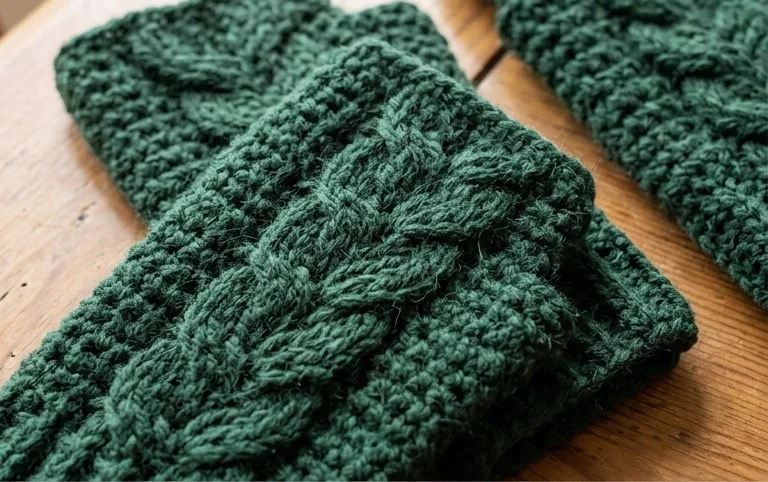
Your finished pair of gloves adds a handmade touch to any sweater or coat, keeping your hands comfortable throughout the chilly months. You might consider using a variegated wool blend to highlight the twists of the cable work, or adjusting the length for extra coverage over your palms. Posting a photo of your completed set helps others see how different yarn colors change the look of the cables. Feel free to browse through our collection of seasonal accessories for more ideas on your next yarn project.